 How-to
How to Reduce Military Move Stress: A 7-Step Plan
Table of Contents
- Why Military Moves Can Feel So Stressful
- Step 1: Start With a Clear PCS Planning Checklist
- Step 2: Build a Flexible Moving Timeline
- Step 3: Look After Your Own Well-Being
- Step 4: Talk With Your Children About the Move
- Step 5: Plan Your Household Goods and Pets
- Step 6: Understand Your Finances and Relocation Allowances
- Step 7: Keep One Shared Plan and Update It When Things Change
- Frequently Asked Questions
Last reviewed: October 27, 2026. Allowances, entitlements and travel rules change. Confirm current requirements for your own orders with your transportation office, finance or pay office, and other official sources linked below.
Why Military Moves Can Feel So Stressful
A Permanent Change of Station (PCS) is more than a change of address. Orders, report dates, school transitions, housing, a spouse's job search, pets and the goodbyes to a community you love can all land at the same time. Some of those dates are set by the military, some are set by schools, landlords or moving companies, and some are your own planning targets.
You may not be able to take every bit of stress out of a PCS. What usually helps is knowing which dates are fixed, what needs attention this week, and who in the household is handling what. The seven steps below are a flexible starting point. Adapt them to your family, your orders and your timeline.
Step 1: Start With a Clear PCS Planning Checklist
A long, unsorted checklist can feel overwhelming. Structure makes the same list easier to use: what is due soon, what depends on a date you are still waiting for, and what can wait.
What to include in your checklist
Most households will want to cover:
- Orders and transportation: reviewing your orders and contacting your transportation office. Military OneSource advises reaching out to schedule your shipment as soon as you receive your PCS orders. Once you have orders, its moving guide suggests you contact your local transportation office to schedule an info/counseling session. Your weight allowance and what is authorized for your move are confirmed through transportation, not estimated on your own.
- Housing: your current lease or housing office move-out steps, and research for the new location.
- School and child care: records, enrollment and a first conversation with the school liaison (see Step 4).
- Money: a PCS budget and the allowances you need to confirm (see Step 6).
- Work: a spouse's job search, licensing or remote-work questions.
- Pets, vehicles and anything else specific to your household.
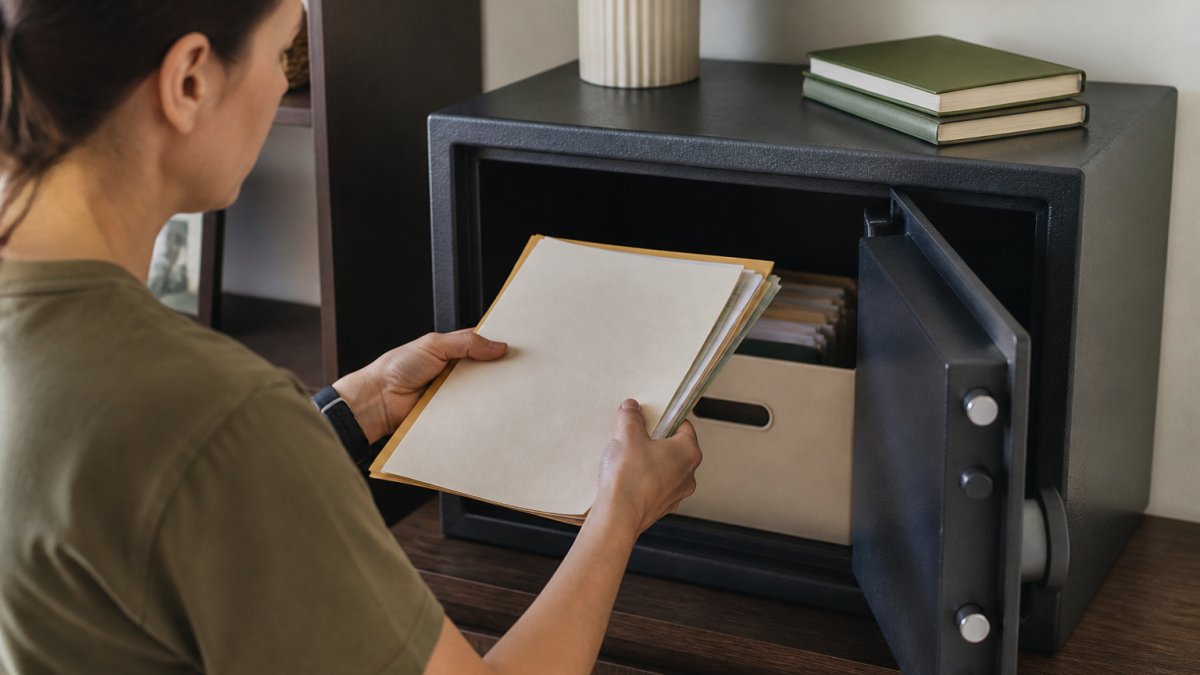
- Personal records: a secure folder of your own (physical or encrypted digital) for orders, medical and school records, and receipts. Carry everyone's original military and dependent ID cards themselves rather than keeping them in the folder; before you scan or photocopy a military ID card to store a digital copy, check with your ID card office or legal office, because federal law restricts reproducing official ID cards.
Sort by type of date, not just by task
It helps to label each date by where it comes from:
- Official deadlines: for example, the report date on your orders.
- Provider-confirmed dates: for example, pack and pickup dates confirmed with your moving company, a lease end date, or an enrollment date confirmed by the school.
- Personal planning targets: dates you choose for yourself, such as "finish the garage this weekend." These can move when life happens.
Then work backward from the fixed dates to see what needs to happen first.
Step 2: Build a Flexible Moving Timeline
There isn't one "right" amount of lead time for a PCS. Some families get months of notice. Others have only a few weeks, and dates can shift after you have started planning. A flexible timeline gives you room to adjust instead of starting over.
- Anchor the timeline to the dates you know. Begin with your report date and any dates your transportation office or moving company has confirmed.
- Expect some windows instead of exact days. For example, Military OneSource explains that "spread dates" are the seven-calendar-day window in which your moving company must pick up your shipment. Delivery timing depends on your shipment and destination, so ask your moving company and transportation office rather than relying on a general estimate.
- Note the items with longer lead times. Pet travel is one example: the American Veterinary Medical Association (AVMA) notes that interstate or international travel with a pet can require preparations that start six months or more in advance. OCONUS moves often add passport, country-entry and command-sponsorship steps.
- Group the work into phases. For example: orders and paperwork, decisions and bookings, packing, travel, arrival and settling in.
- Build in buffer time where you can, and decide in advance which tasks could be delegated, simplified or dropped if dates move.
Step 3: Look After Your Own Well-Being
A PCS can mean leaving friends, routines, a job or a school community all at once. It makes sense if the move affects your mood, sleep or patience, and it can affect each person in the household differently.

Notice how the move is affecting you
Many people notice tiredness, trouble sleeping, irritability, worry or sadness about goodbyes during a move. Short-term reactions like these are common during big life changes. But don't assume that every symptom is just "moving stress." If feelings or physical symptoms continue, get stronger, or make it hard to manage daily life, talk with a health care provider.
Build your support network early
- Stay in touch with friends and neighbors at your current location. Military OneSource notes that staying connected with friends, family and your military community can help ease the stress of uncertainty.
- Look for spouse, family or unit groups connected to your new installation.
- Know what confidential support is available before you need it.
Step 4: Talk With Your Children About the Move
Children often notice change and stress around them, even when no one has said anything yet. Honest, age-appropriate conversations, familiar routines and patience can help them through the move. Every child adjusts in their own way and on their own timeline.
Start early and keep the conversation open
Military OneSource encourages families to share the news early and keep communication open throughout the move, so children have time to absorb it and say goodbye. Some ideas:
- Use simple, honest words that fit your family. For example: "Mom has new orders, so our family is moving to a new base this winter," or "I'm getting a new assignment, and we're moving together."
- Listen to their questions and worries without rushing to fix them. Let them know that being sad, excited or both is OK.
- Explain what will stay familiar, what will change, and who will be there to care for them.
- Keep familiar routines going as much as possible, such as meals, bedtime and a weekly family tradition.
- Encourage goodbyes and keepsakes, such as a photo or a small item from a favorite place.
- Give each child a role that fits their age. Younger children might pack a "first day box" of favorite items. Older children and teens might help research the new area, schools or activities.
Prepare for the school transition
Military OneSource recommends contacting your current installation's school liaison as soon as you get PCS orders. School liaisons can connect you with the liaison at your new installation and help with school selection, enrollment, placement and special education needs. Together with your child, you might:
- Look at the new school's website and talk about what might be the same and what might be different.
- Explore one or two activities they might like to try, when they are ready.
- Ask about youth sponsorship or welcome programs at the new installation.
- Let them choose something about the new home, such as how to arrange their room.
After you arrive: let each child settle at their own pace
There is no deadline for feeling at home. Military OneSource suggests giving everyone the time they need to adjust, keeping routines going, and exploring new places together, including helping your child find a special new spot of their own. A few ideas:
- Bring back familiar routines early, like meals, bedtime and a family movie night.
- Support continued friendships. Calls, messages and video chats with old friends can be a comfort while new friendships grow.
- Offer chances to meet people, like an activity, a playground or an installation event, without pressure to make friends by a certain date.
- Keep checking in. Some children seem fine at first and share feelings later.
If a child's worry, sadness or behavior changes concern you, talk with their pediatrician or another health care provider, or the school counselor. Military OneSource also offers non-medical counseling options for children and youth, which require parental consent for minors. For younger children, Sesame Street for Military Families has free resources about moving.
Step 5: Plan Your Household Goods and Pets
Knowing how your belongings, vehicles and pets will travel makes the rest of the plan easier to see.
Declutter in manageable pieces
Start when you can, one room or category at a time. For each item, ask: "Do we use this? Do we love this? Will it fit the next home?" Sort into keep, donate, sell and discard. Less stuff can mean less packing and unpacking. Your weight allowance comes from your orders and entitlements, and your transportation office can confirm it. Military OneSource also points to a weight estimator for comparing an estimated shipment with your entitlement.
Government-arranged move or PPM: practical tradeoffs
Many families use a government-arranged household goods shipment, a Personally Procured Move (PPM, formerly called a DITY move), or a mix of both. Military OneSource notes that you can split your total allowable weight into multiple shipments. There is no option that is less stressful for every family, so weigh the tradeoffs for your situation:
| Government-arranged shipment | PPM | |
|---|---|---|
| Who packs and moves | A moving company assigned through the military's process | You, or help you hire and manage yourself |
| Timing | Pickup within confirmed spread dates. Ask about delivery timing for your shipment. | You set the schedule within your orders and travel time |
| Effort | Less physical work. Time spent on pack days, inventories and delivery. | Packing, loading, driving and unloading, plus paperwork |
| Money | Shipment arranged within your entitlement | Incentive of up to 100% of the government's constructed cost, based on the weight you actually move, not to exceed your authorized weight allowance. Confirm the amount with your transportation office. Out-of-pocket costs up front. |
| Documentation | Inventory and delivery paperwork. Claims if items are lost or damaged. | Certified full and empty weight tickets for the vehicle, plus receipts |
Things to consider include distance, how much you own, who is available to help, children's and pets' needs, and the physical demands of a self-move. Confirm the current PPM rules, advance options and paperwork with your transportation office before you commit.
Moving with pets
Pets need their own plan, separate from your household goods. Military OneSource states that "Your moving company cannot ship any live animals as part of your move." Pets usually travel with you by car, or by air on a commercial airline or, for some OCONUS moves, the Patriot Express. A few early steps can keep pet travel from becoming a last-minute worry:
- Talk with your veterinarian early about this specific trip, including health paperwork, crate needs and whether any medication is appropriate. The AVMA advises you to consult your veterinarian before giving tranquilizers or sedatives, which can increase the risk of heart or respiratory problems and generally are not allowed by airlines.
- Check the rules for your route and your new home. Requirements vary by state, country, airline and housing. Start with USDA APHIS pet travel, your airline's current rules and the pet policy for your new housing.
- Book air travel early if you need it. Military OneSource notes that Patriot Express pet spaces are limited and booked first-come, first-served, and reservations go through your transportation office. For commercial flights, contact your airline directly.
- Ask about costs. Some pet relocation costs may be reimbursable within set limits. Confirm what applies to your move with your transportation or finance office.
After you arrive, a quiet room with water, familiar bedding and the usual feeding and walking routine can help your pet settle while boxes are still coming in.
Step 6: Understand Your Finances and Relocation Allowances
A PCS can bring costs that allowances don't fully cover. Knowing what may be available, and what you still need to confirm, can make budgeting less stressful.
Allowances and benefits to ask about (eligibility depends on your orders, pay grade, dependents and move type):
- Dislocation Allowance (DLA): partially reimburses household moving expenses on a PCS. The amount depends on pay grade and dependency status.
- Temporary Lodging Expense (TLE): partially reimburses eligible temporary lodging and meal expenses in CONUS during a PCS. What matters is where the temporary lodging is, so a PCS to or from an overseas station can also include TLE for lodging in CONUS. Day limits depend on your destination, eligibility and current official guidance. For example, the DoD raised the maximum for moves to a permanent duty station within CONUS from 14 to 21 days, effective Nov. 27, 2024, and some housing-shortage areas have been authorized longer periods. Daily limits, conditions and approval requirements apply, so confirm your eligibility, and any extension, with your pay or finance office.
- Temporary Lodging Allowance (TLA): a separate allowance that partially pays for higher-than-normal expenses at eligible temporary lodging OCONUS when the government requires a move into temporary lodging. TLA is governed separately under the DoD Financial Management Regulation and service guidance, not just the Joint Travel Regulations. See the Defense Travel Management Office's TLA overview and confirm what applies with your pay or finance office.
- Household goods (HHG) shipment: shipped within your authorized weight allowance. If items are lost or damaged, you may be entitled to full replacement or repair value, subject to liability limits and notice and claim deadlines. Read the claims guide before delivery day.
- Spouse career support: Military OneSource offers career coaching through SpouseWorks (formerly SECO).
Create a PCS budget
- List expected costs: travel, temporary lodging, deposits, utilities, pet travel, school and child care needs.
- Note which costs an allowance may partly cover, and which are still unconfirmed.
- Plan for the gap between allowances and actual costs, plus a buffer for surprises.
Step 7: Keep One Shared Plan and Update It When Things Change
Military moves don't always go as first planned. Report dates shift, housing falls through, or a pickup date moves. Keeping everything in one shared plan helps you adjust without rebuilding from scratch:
- Keep tasks, key dates and open questions in one place everyone in the household can see.
- Note who owns each task, whether that's you, a spouse, an older child or a helpful friend. In a single-parent or dual-military household, decide early what can be delegated or simplified.
- When something changes, update the date first, then check which tasks it affects.
- Keep questions you still need answered visible, like "Confirm TLE eligibility with finance" or "Ask transportation about pet options."
A notebook, shared document or spreadsheet can do this. If you'd like a tool built for PCS planning, Palmer PCS Progression (explore the sample PCS plan) builds a move-relevant plan from your My PCS Profile, where you enter your duty-station route, move timing, moving context, housing path and school transition. When an order or report date changes, you update it in My PCS Profile, and Auto Due Dates and Priority reorganize the relevant tasks around the new timing. These changes apply to your planning tasks; they do not change official deadlines, orders, reservations or moving-company bookings. Views like Today / Next Steps, Quick Wins and Overwhelm Mode help you find a next step, and you can invite your household into the same plan and assign tasks. Palmer is an independent planning tool, not an official military resource. It never asks for copies of orders, Social Security numbers or DoD ID numbers, and those details, like financial account credentials, belong outside the plan. Keep them in your own secure folder, and verify requirements with the appropriate military office.
A PCS may still have hard days. Taking it one step at a time, with clear dates, shared responsibilities and support you can reach when you need it, can make the move feel more manageable for everyone in your household.
Frequently Asked Questions
How can I reduce military move stress when there is so much to manage?
Sort your plan by the kind of date behind each task: official deadlines such as your report date, dates confirmed by providers such as your moving company or school, and your own planning targets. Contact your transportation office soon after you receive orders. Then keep an eye on what is coming up while choosing a few manageable actions for this week. Keep everything in one shared plan, note who owns each task, and update the dates when something changes.
Where can military families get support for PCS stress?
Military OneSource offers free, short-term, non-medical counseling for eligible service members and family members, by phone at 800-342-9647 or online. It can help with issues such as stress, parenting and grief, but it does not diagnose or treat diagnosed mental health conditions, and its confidentiality has limits, such as required reporting of suspected abuse or a risk of harm. If feelings or physical symptoms persist or make daily life hard, talk with a health care provider. In a crisis, contact the Military Crisis Line by dialing 988 and pressing 1.
How do I explain a military move to young children without frightening them?
Share the news early in simple, honest words that fit your family, for example: "Mom has new orders, so our family is moving to a new base." Listen to their questions and feelings. Explain what will stay familiar, what will change, and who will be there to care for them, and keep familiar routines going. Let them say goodbye, keep in touch with friends, and help with something small, like packing a first-day box. Give them time to adjust at their own pace, and contact your installation's school liaison as soon as you have orders.
Can my pet travel with our household goods during a PCS?
No. Moving companies cannot ship live animals, so pets need their own travel plan, usually by car with you or by approved air transport such as a commercial airline or, for some overseas moves, the Patriot Express, booked through your transportation office. Talk with your veterinarian about the specific journey, including health paperwork, crate requirements and whether any medication is appropriate. The AVMA cautions that tranquilizers and sedatives can increase heart and breathing risks and are generally not allowed by airlines.
Can I deduct PCS moving expenses on my taxes?
Reimbursements are not claimed on your taxes; they come through your travel voucher. Separately, the IRS says active-duty members moving on a PCS may be able to deduct eligible unreimbursed moving expenses on Form 3903. Expenses covered by tax-exempt government reimbursements or allowances, or paid directly by the government, cannot also be deducted, and meals are not deductible. Keep your receipts and check with a MilTax consultant or tax professional.